
Uncategorized
Reishi Extract vs Whole Mushroom Powder: Which Should You Buy?
Reishi Extract vs Whole Mushroom Powder: Which Should You Buy?
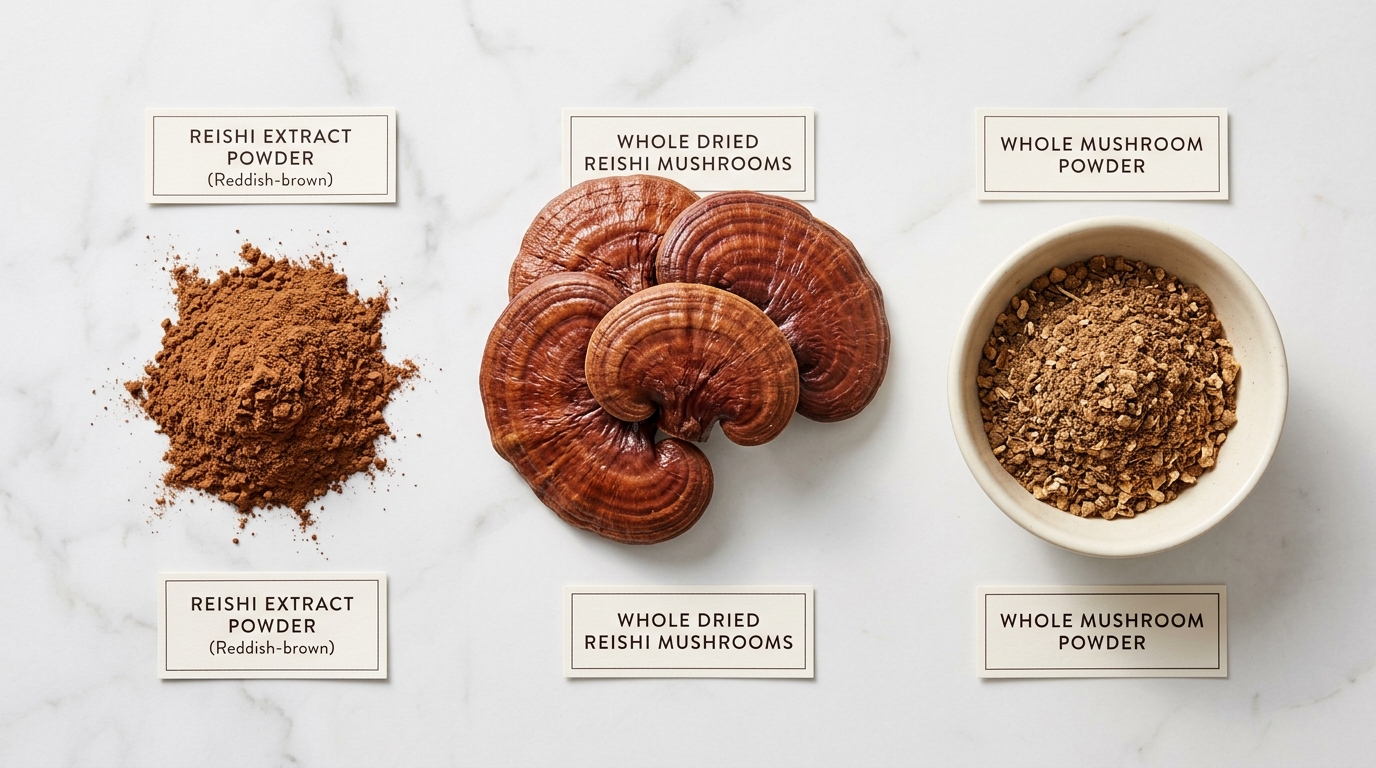
Quick Answer: Reishi extract delivers 5-10 times more concentrated beneficial compounds than whole mushroom powder and absorbs more readily in your body. Choose extract if you want maximum potency for immune support and relaxation. Pick whole mushroom powder if you prefer a traditional, whole-food approach and plan to use larger serving sizes in smoothies or recipes.
Walk into any supplement store or browse online for reishi mushroom products, and you’ll immediately face a confusing choice: extract or whole mushroom powder? The labels promise similar benefits—immune support, stress relief, better sleep—but the formats deliver vastly different levels of active compounds.
This decision matters because reishi’s beneficial effects come from specific bioactive molecules that exist in varying concentrations depending on how the mushroom gets processed. Understanding these differences helps you choose the format that matches your health goals and budget.
The Complete Comparison: Extract vs Powder vs Dual-Extract
| Factor | Whole Mushroom Powder | Single Extract | Dual Extract |
|---|---|---|---|
| Beta-glucan content | 5-15% | 20-30% | 30-50% |
| Triterpene content | Low (1-3%) | Moderate (4-8%) | High (10-15%) |
| Bioavailability | Low (chitin walls block absorption) | Moderate | Highest (broken cell walls) |
| Typical serving size | 3,000-5,000 mg | 1,000-1,500 mg | 500-1,000 mg |
| Taste | Earthy, woody, mild | Strong, bitter | Very bitter |
| Best for | Smoothies, coffee blends, cooking | Capsules, targeted dosing | Maximum potency, therapeutic use |
| Price per serving | $0.30-0.60 | $0.50-1.00 | $0.80-1.50 |
Understanding Fruiting Body vs Mycelium: The Foundation of Quality
Before you can evaluate extract versus powder, you need to understand what part of the mushroom you’re actually buying. This distinction shapes everything about the product’s quality and effectiveness.
The fruiting body is the part of reishi that looks like an actual mushroom—the reddish-brown, woody, shelf-like structure that grows on trees. This fruiting body concentrates the beneficial compounds that clinical studies investigate, including beta-glucans and triterpenes.
The mycelium forms the mushroom’s root system—a network of thread-like filaments that grow underground or, in commercial production, on grain substrates like rice or oats. Many cheaper supplements use mycelium because it grows faster and costs less to produce.
Here’s the critical difference: mycelium grown on grain often contains more grain starch than actual mushroom material. Some products test as low as 5-7% beta-glucans because the remaining 93-95% consists of grain filler. Quality fruiting body extracts test at 20-50% beta-glucans.
Always choose products that clearly state “100% fruiting body” on the label. This ensures you’re getting actual mushroom compounds, not grain filler marketed as a mushroom supplement.
Extraction Methods Explained: Hot Water, Alcohol, and Dual Extraction
Raw reishi mushrooms contain beneficial compounds locked inside tough chitin cell walls—the same material that forms insect exoskeletons. Your digestive system cannot break down chitin effectively, which means eating powdered whole mushrooms delivers limited benefits.
Extraction solves this problem by breaking down the cell walls and concentrating the active compounds. Different extraction methods capture different types of beneficial molecules:
Hot Water Extraction
Hot water extraction uses prolonged heating (often several hours at 80-100°C) to break down cell walls and extract water-soluble compounds, primarily beta-glucans. These polysaccharides support immune function and represent one of reishi’s most researched benefits.
This method captures approximately 60-70% of reishi’s beneficial compounds. If a product simply says “extract” without specifying the method, it likely uses hot water extraction.
Alcohol Extraction
Alcohol extraction uses ethanol to pull out alcohol-soluble compounds, particularly triterpenes. Reishi’s triterpenes contribute to its adaptogenic properties and support the body’s stress response. These compounds give reishi its characteristic bitter taste.
Alcohol extraction alone misses the water-soluble beta-glucans, capturing only 30-40% of reishi’s beneficial compounds. You rarely see alcohol-only reishi extracts because they omit the immune-supporting polysaccharides.
Dual Extraction (The Complete Method)
Dual extraction combines both methods—first hot water extraction, then alcohol extraction—to capture the full spectrum of beneficial compounds. This process delivers both the water-soluble beta-glucans and the alcohol-soluble triterpenes.
Quality dual-extracted reishi products test at 30-50% beta-glucans and 10-15% triterpenes, representing the most complete and potent form available. This extraction method costs more to produce but delivers significantly higher concentrations of active compounds per serving.
When to Choose Whole Mushroom Powder
Despite extract’s superior potency, whole mushroom powder serves specific purposes well:
Culinary use: Whole mushroom powder works beautifully in recipes, coffee blends, and smoothies. Its milder flavor blends easily, and you consume it as part of a larger beverage or meal where the lower potency matters less.
Traditional wellness approach: Some people prefer consuming the whole mushroom in its natural form rather than a concentrated extract. While this delivers lower levels of active compounds, it maintains the complete nutritional profile including trace minerals and fiber.
Budget considerations: Whole mushroom powder costs significantly less per ounce than extracts. If you’re willing to take larger serving sizes (3-5 grams instead of 1 gram), you can achieve similar benefits at a lower cost per serving.
Mild, daily wellness routine: For gentle, long-term support rather than therapeutic dosing, whole mushroom powder provides a convenient option you can add to your morning coffee or tea without measuring precise amounts.
When Extract Makes the Better Choice
Choose reishi extract if you want:
Maximum potency in minimum volume: Extract concentrates the beneficial compounds, meaning you take 500-1,000 mg instead of 3,000-5,000 mg. This makes capsules practical and tinctures highly concentrated.
Therapeutic dosing for specific goals: If you’re using reishi specifically for immune support during cold and flu season, or for sleep and relaxation support, extract delivers measurably higher levels of the compounds studied in clinical research.
Better absorption: The extraction process breaks down chitin cell walls that your digestive system cannot process. This dramatically improves bioavailability—your body can actually access and use the beneficial compounds.
Standardized dosing: Quality extracts list their beta-glucan and triterpene percentages, allowing you to calculate exactly how many milligrams of active compounds you’re consuming. Whole powder varies widely in potency depending on growing conditions.
Capsule format preference: Fitting an effective dose of whole mushroom powder into capsules requires taking 6-10 large capsules. Extract requires just 2-3 capsules for an equivalent amount of beneficial compounds.
How to Use Each Format
Whole mushroom powder: Add 1-2 teaspoons (3,000-5,000 mg) to coffee, tea, smoothies, or recipes. Take it in the evening since reishi supports relaxation and sleep. Mix it into warm liquids for better dissolution.
Reishi extract capsules: Take 1,000-1,500 mg (typically 2-3 capsules) in the evening, about 1-2 hours before bed. Take with food to minimize potential digestive discomfort when first starting.
Dual-extract tincture: Take 1-2 ml (1-2 droppers full) in the evening. You can take it directly under the tongue for faster absorption or mix it into warm water or tea. The bitter taste indicates high triterpene content—a quality marker.
Important Safety Information
Bleeding risk: Reishi may slow blood clotting. If you take anticoagulant medications (warfarin, aspirin, clopidogrel) or have a bleeding disorder, consult your healthcare provider before using reishi.
Surgery precaution: Stop taking reishi at least two weeks before scheduled surgery due to its effects on blood clotting.
Immune considerations: While reishi supports immune function, people taking immunosuppressant medications should discuss reishi use with their healthcare provider.
Pregnancy and breastfeeding: Limited research exists on reishi’s safety during pregnancy and breastfeeding. Consult your healthcare provider before use.
Reading Labels: What to Look For
Quality reishi products—whether extract or powder—share specific characteristics:
Source verification: The label should state “100% fruiting body” or “100% reishi fruiting body extract.” Avoid products that don’t specify or that mention “mycelium on grain.”
Beta-glucan content: Look for products that list their beta-glucan percentage. Whole powder should have at least 10-15%. Extracts should reach 20-30% or higher. If this information is missing, the manufacturer may be hiding low-quality material.
Extraction ratio: For extracts, look for ratios like 8:1 or 10:1, meaning 8-10 pounds of mushrooms concentrate into 1 pound of extract. Higher ratios indicate more concentrated products.
Third-party testing: Reputable brands provide Certificates of Analysis from independent labs verifying purity, potency, and absence of heavy metals or contaminants.
USDA Organic certification: While not mandatory, organic certification ensures the mushrooms grew without pesticides and met rigorous production standards.
The Best Choice: Dual-Extracted Fruiting Body
For most people seeking reishi’s full range of benefits—immune support, stress resilience, and sleep quality—dual-extracted fruiting body extract represents the optimal choice. It delivers the highest concentration of beneficial compounds, the best bioavailability, and the most reliable dosing.
Whole mushroom powder serves well as a culinary ingredient or for those who prefer a traditional whole-food approach and don’t mind larger serving sizes. But if you want therapeutic support with clinical-level dosing, extract wins on every metric that matters: potency, absorption, convenience, and cost-effectiveness per milligram of active compounds.
Frequently Asked Questions
Yes, you can make hot water extracts by simmering dried reishi slices for several hours. However, achieving the concentration and quality control of commercial dual extracts requires specialized equipment and processes. Home extraction works for tea but doesn’t match commercial extract potency.
Properly stored reishi extract (in a cool, dry, dark place) maintains potency for 2-3 years. Whole mushroom powder oxidizes faster and typically maintains peak potency for 12-18 months. Always check expiration dates and store products in airtight containers.
Extract requires significantly more raw mushrooms (8-10 pounds of mushrooms produce 1 pound of 8:1 extract), plus additional processing steps and quality testing. However, the cost per serving of active compounds is often comparable or even lower with extract due to the higher concentration.
Yes, some people combine both—using powder in their morning coffee for mild support and taking extract capsules in the evening for therapeutic dosing. Just track your total reishi intake to stay within recommended ranges (typically 1-3 grams of extract or 3-6 grams of powder daily).
