
Uncategorized
Dual-Extracted Lion’s Mane Tincture: What It Is and How to Choose One
Dual-Extracted Lion’s Mane Tincture: What It Is and How to Choose One
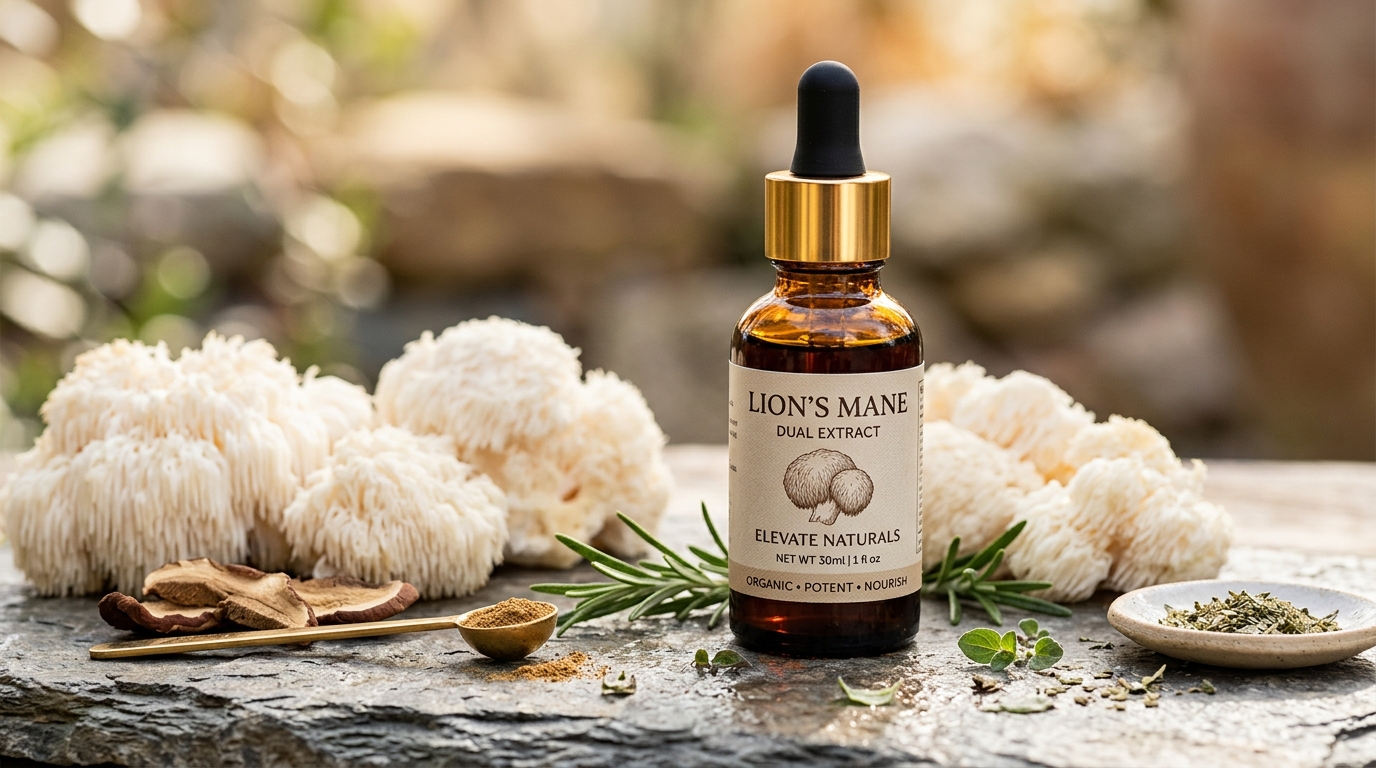
What Is Dual-Extracted Lion’s Mane Tincture? Dual extraction combines hot water and alcohol extraction to capture both the water-soluble beta-glucans and alcohol-soluble hericenones and erinacines from lion’s mane fruiting bodies. The result is a concentrated liquid extract that delivers the full spectrum of beneficial compounds in a highly bioavailable form, typically suspended in alcohol or glycerin for stability and preservation.
You’ve researched lion’s mane and decided you want the most potent, bioavailable format available. That decision leads you straight to dual-extracted tinctures—the premium option that serious users choose when they want clinical-level dosing in a convenient liquid form.
But walking into the tincture market reveals a confusing landscape of extraction ratios, alcohol percentages, and wildly varying prices. Some products cost $25 for a month’s supply while others exceed $60. Some come from certified organic sources while others provide no sourcing information at all.
This guide decodes the tincture format, explains what dual extraction means, compares tinctures against capsules and powders, and gives you a practical checklist for identifying premium products worth your investment.
Why Tinctures Outperform Capsules and Powders
Lion’s mane comes in three primary formats: powders, capsules, and tinctures. Each serves different needs, but tinctures offer distinct advantages for serious users.
| Factor | Powder | Capsules | Tincture |
|---|---|---|---|
| Bioavailability | Low (chitin walls intact) | Moderate (depends on extraction) | Highest (pre-extracted compounds) |
| Absorption speed | 60-90 minutes | 45-60 minutes | 15-30 minutes (sublingual) |
| Dosing precision | Moderate (scoops vary) | Good (standardized capsules) | Excellent (dropper measurements) |
| Shelf life | 12-18 months | 18-24 months | 3-5 years (alcohol preserves) |
| Portability | Moderate (bulky containers) | Excellent (small bottles) | Excellent (small bottles) |
| Taste | Earthy, mild | None (encapsulated) | Strong, bitter, earthy |
| Customizable dosing | Yes (measure scoops) | Limited (fixed capsule size) | Excellent (adjust drops/ml) |
| Price per serving | $0.40-0.80 | $0.60-1.20 | $0.80-1.50 |
Tinctures shine in three key areas: bioavailability (your body absorbs the compounds more readily), speed of absorption (especially when taken sublingually under the tongue), and dosing flexibility (you can adjust drops precisely based on your needs).
Breaking Down Dual Extraction
The “dual” in dual extraction refers to a two-stage process that captures compounds with different solubility profiles:
Stage 1: Hot Water Extraction
Producers simmer lion’s mane fruiting bodies in hot water (typically 80-100°C) for several hours. This prolonged heating breaks down the tough chitin cell walls and extracts water-soluble compounds, primarily beta-glucans—the polysaccharides that support immune function and cognitive health.
Hot water extraction alone captures approximately 60% of lion’s mane’s beneficial compounds. It misses the alcohol-soluble fraction entirely.
Stage 2: Alcohol Extraction
After hot water extraction, producers perform alcohol extraction using ethanol (typically 25-60% alcohol by volume). This stage pulls out the alcohol-soluble compounds that hot water cannot extract, including hericenones and erinacines—the unique molecules that make lion’s mane special for cognitive support.
These compounds appear to support nerve growth factor (NGF) production, which plays a crucial role in neuron health and function. You won’t get these compounds from hot water extraction alone.
The Combined Result
Dual extraction delivers both fractions in a single product. You receive the water-soluble beta-glucans and the alcohol-soluble hericenones and erinacines together, representing the full spectrum of compounds that clinical research investigates.
Quality dual-extracted tinctures test at 25-40% beta-glucans and contain measurable levels of triterpenes and other bioactive compounds. This concentration means a single 1-2 ml dose delivers more beneficial compounds than 5-10 capsules of inferior products.
How to Use Lion’s Mane Tincture
Dosage: Most quality tinctures recommend 1-2 ml (one to two droppers full) daily. This typically delivers 1,000-1,500 mg of lion’s mane extract—the range supported by clinical research for cognitive benefits.
Timing: Take lion’s mane tincture in the morning with breakfast or 30-60 minutes before mentally demanding tasks. Unlike stimulants, it doesn’t provide an immediate jolt, but many users notice improved mental clarity within 30-60 minutes.
Method: You can take tinctures in three ways:
- Sublingual (under the tongue): Hold the tincture under your tongue for 30-60 seconds before swallowing. This allows absorption directly through the mucous membranes, bypassing first-pass liver metabolism and speeding absorption to 15-30 minutes.
- Mixed in liquid: Add the tincture to water, tea, coffee, or smoothies. This masks the bitter taste but slows absorption slightly since the compounds must pass through your digestive system.
- Direct consumption: Place the drops directly in your mouth and swallow. This is fastest but exposes you to the full bitter, earthy flavor.
Consistency matters: Take your dose daily for at least 8-12 weeks. Clinical studies demonstrating cognitive benefits used consistent daily dosing over 2-4 months. Lion’s mane builds its effects gradually rather than delivering immediate results.
Essential Quality Checklist for Lion’s Mane Tinctures
Understanding Tincture Pricing
Quality dual-extracted lion’s mane tinctures typically range from $25 to $50 for a one-month supply (30-60 ml bottle). This price band reflects the reality of quality production: dual extraction requires more raw material (8-10 pounds of mushrooms per pound of extract), additional processing steps, and rigorous testing.
Products below $20 often cut corners through mycelium-on-grain substitution, single extraction methods, or underdosing. Products above $60 may offer premium organic sourcing or higher concentration but verify they actually deliver proportionally more beneficial compounds to justify the premium.
The best value comes from brands in the $30-$45 range that provide third-party testing, transparent sourcing, clear extraction ratios, and beta-glucan disclosure.
Comparing Top Tincture Options
What to Compare When Evaluating Products
When you’re comparing two or three tincture options, use this framework to identify the best value:
1. Calculate cost per mg of active compounds: Don’t just compare bottle prices. Look at the total mg of lion’s mane extract per bottle and divide by the price. A $35 bottle with 30,000 mg costs $1.17 per 1,000 mg. A $45 bottle with 45,000 mg costs $1.00 per 1,000 mg—better value despite the higher sticker price.
2. Verify extraction ratio claims: Higher extraction ratios (10:1, 15:1) should command higher prices because they require more raw material. If a 15:1 extract costs the same as an 8:1 extract, question the accuracy of the claims.
3. Check for beta-glucan testing: Two products might both claim dual extraction, but one tests at 30% beta-glucans while the other tests at 15%. The 30% product delivers twice the concentration of beneficial polysaccharides per ml.
4. Review third-party verification: Brands providing COAs demonstrate confidence in their quality. Those hiding behind vague “quality assurance” statements without providing test results raise red flags.
5. Assess sourcing transparency: Does the brand disclose where their lion’s mane grows? Quality producers proudly share sourcing information—often from organic farms in North America, Europe, or carefully selected Asian suppliers. Vague sourcing suggests potential quality issues.
Tinctures vs Capsules: Which Should You Choose?
Choose Tinctures If You Want:
- Maximum bioavailability and fastest absorption
- Precise dose adjustment (easy to increase or decrease by drops)
- Long shelf life (3-5 years vs 18-24 months for capsules)
- Sublingual administration for faster effects
- The ability to add to beverages or take directly
Choose Capsules If You Want:
- No taste (capsules mask the bitter flavor completely)
- Travel convenience (easier through airport security)
- Alcohol-free format (relevant for some people)
- Simpler dosing (just swallow 2-3 capsules)
- More discreet consumption
Both formats can deliver excellent results if you choose quality products. Tinctures edge ahead on bioavailability and flexibility, while capsules win on convenience and palatability. Your lifestyle and preferences should guide this choice—both work when you select products meeting the quality standards outlined above.
Red Flags: What to Avoid
Steer clear of tinctures that:
- Don’t specify fruiting body vs mycelium: If the label just says “lion’s mane” without clarifying the source, assume it’s lower-quality mycelium on grain.
- Claim proprietary blends: “Proprietary blend” often hides the fact that lion’s mane makes up only a small percentage of the product, with the rest being fillers or cheaper mushrooms.
- Lack extraction method information: If the label doesn’t specify dual extraction or the extraction method, it’s probably single-extracted hot water extract missing the alcohol-soluble compounds.
- Make disease treatment claims: Legitimate brands use structure/function language (“supports cognitive function”) rather than medical claims (“treats Alzheimer’s”). Disease claims violate FDA regulations and signal a disreputable manufacturer.
- Offer no third-party testing: In a market where contamination and mislabeling occur, refusing to provide COAs suggests the manufacturer has something to hide.
The Bottom Line: Choosing Your Lion’s Mane Tincture
Dual-extracted lion’s mane tincture represents the premium format for serious users who want maximum potency, optimal bioavailability, and clinical-level dosing in a convenient liquid form. The dual extraction process captures both water-soluble and alcohol-soluble compounds, delivering the full spectrum of beneficial molecules that clinical research investigates.
Look for products that check all the quality boxes: 100% fruiting body source, verified dual extraction, disclosed extraction ratio (8:1 or higher), tested beta-glucan content (25-40%), third-party COAs, and preferably USDA organic certification. Expect to pay $30-$45 for a quality one-month supply—premium production costs more but delivers measurably better results.
Take 1-2 ml daily, preferably in the morning, either sublingually for fastest absorption or mixed into your morning coffee or tea. Commit to at least 8-12 weeks of consistent use to experience the full cognitive support benefits that clinical studies document.
When you choose wisely, dual-extracted lion’s mane tincture provides the most concentrated, bioavailable, and effective way to experience this remarkable mushroom’s cognitive and neurological support properties.
